
Aquatics
Precision for the water. Comfort everywhere around it.
Pools are the hardest buildings most owners will ever commission. Architecture, engineering, and construction have to be coordinated from the first meeting, not handed between firms. We hold all three.
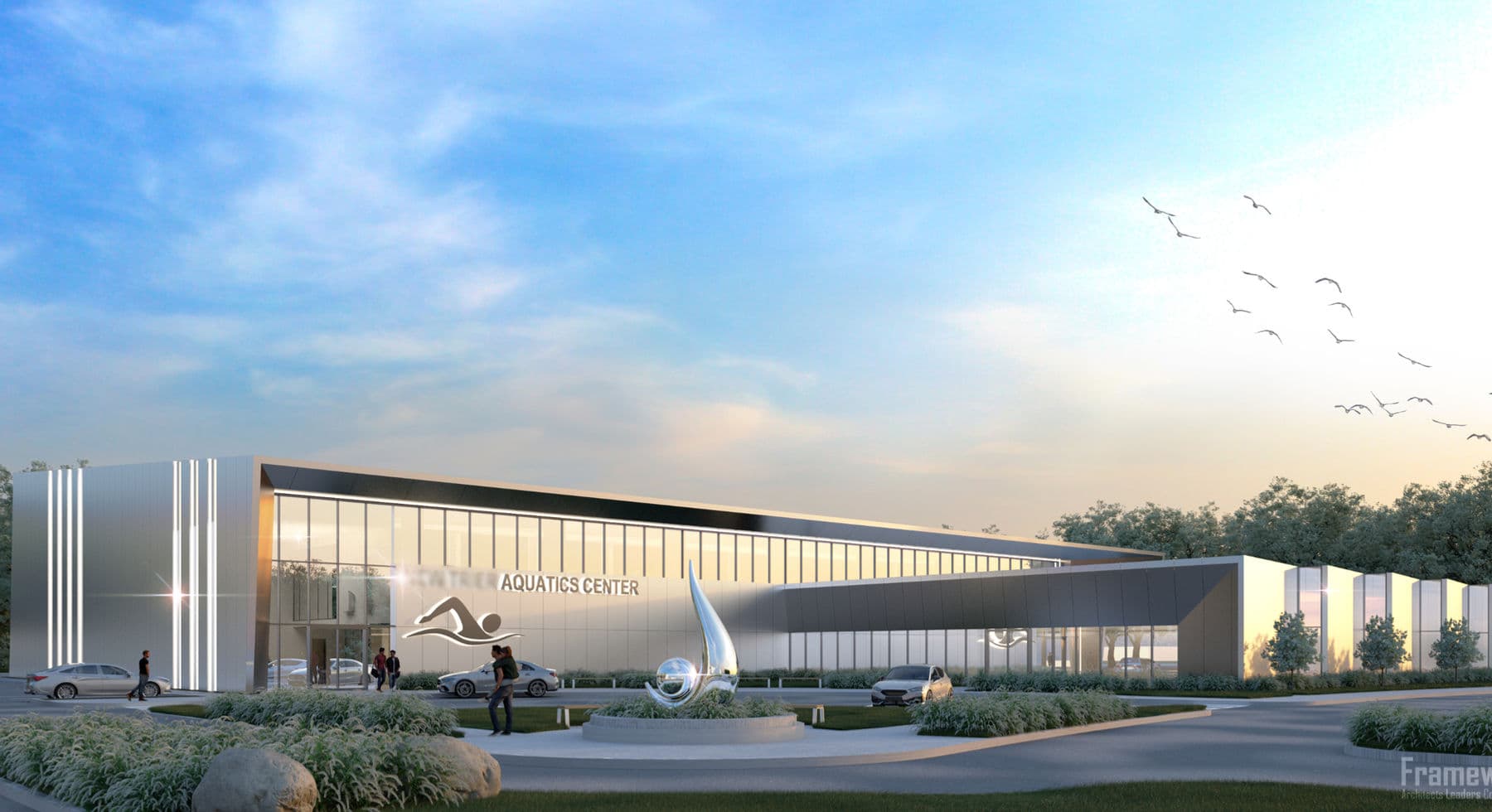
What the work aligns
Performance begins with clear priorities.
- Competition and community use in one building
- Humidity, acoustics, and air quality handled
- Safe decks for swimmers and spectators
- A pool your staff can actually maintain
Water is a systems problem and a people problem.
Pool geometry, water treatment, air quality, humidity, corrosion, acoustics, lighting, and energy all have to work while swimmers, families, coaches, and spectators move around them.
One pool can serve everyone.
Competition, lessons, therapy, wellness, and open swim can share a building without compromising safety, as long as the programming is thought through first.
Settle the technical calls early.
Getting architecture and engineering in the same room up front is how you understand the space, cost, and phasing consequences before the pool decisions lock in.
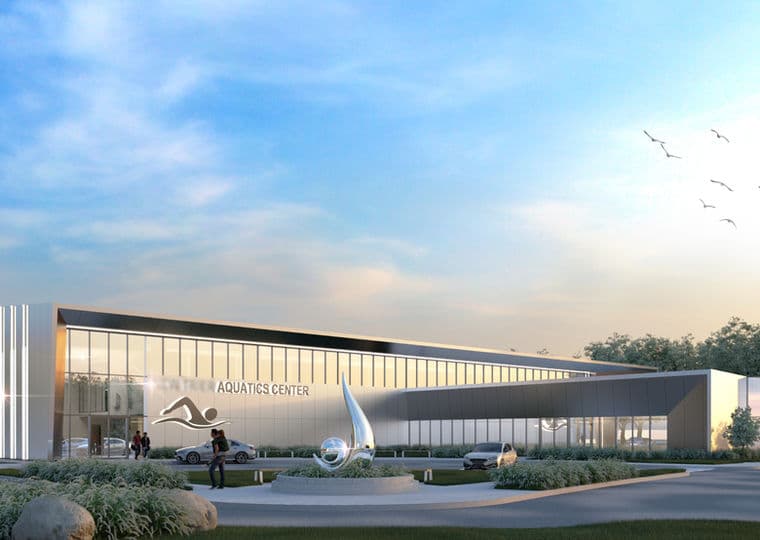
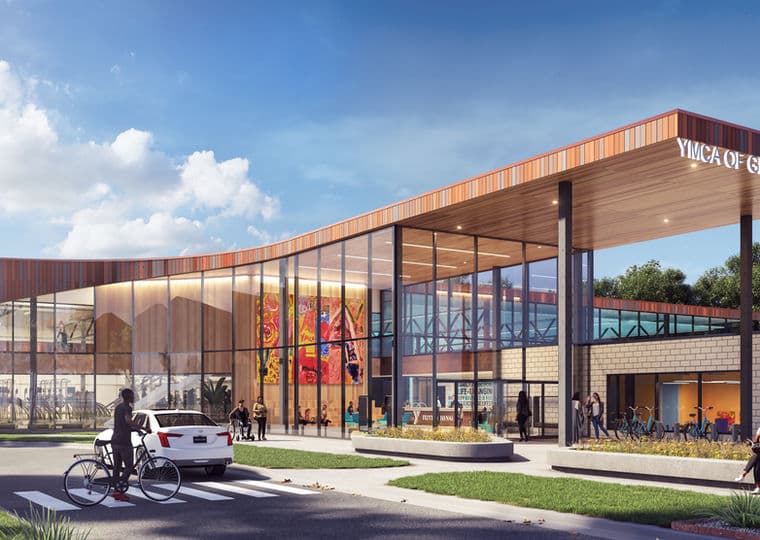
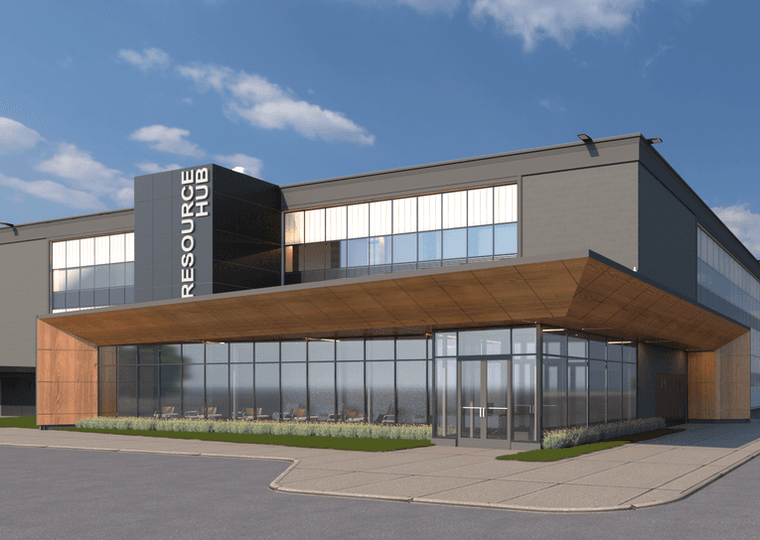
Relevant work
Proof in the portfolio.
Useful answers
Questions owners ask early.
What is the difference between a natatorium and an aquatic center?
A natatorium is the building or room holding an indoor pool. An aquatic center may hold several pools plus changing, fitness, instruction, therapy, spectator, and community spaces.
Why are natatorium building systems so important?
Indoor pools are brutal on a building. Humidity, air quality, corrosion, acoustics, and energy loads all have to be coordinated or the building degrades and the swimmers are miserable.
Can one aquatic facility support competition and community use?
Yes. Pool layout, scheduling, access, seating, and circulation can be planned so serious competition and public swim lessons share the same building.
Start before the scope hardens